













TL;DR:
- Newcastle, NSW is a vibrant coastal city with a diversified economy centered on the port, education, and health services. It features beaches, a maritime heritage, and a growing cultural scene, offering a high quality of life at a lower cost than Sydney. The city is well-connected to Sydney by road, rail, and air, making it an attractive destination for residents and visitors alike.
This page is primarily about Newcastle, New South Wales, Australia’s seventh-largest city and the Hunter Region’s beating heart. A shorter profile of Newcastle upon Tyne, England, follows so you can tell the two apart at a glance. Whether you’re planning a visit, weighing a move, or just trying to find local services, this guide covers it all.
Here’s what you’ll find:
- Travellers: beaches, coastal walks, top attractions and practical visitor tips
- Movers and residents: suburbs, cost of living, education, healthcare and relocation advice
- Students and job seekers: University of Newcastle, vocational training and the local job market
- Locals: council services, the Newcastle Herald, emergency contacts and civic resources
- Curious readers: a side-by-side comparison of Newcastle, NSW and Newcastle upon Tyne
Three institutions tell you a lot about the city before you even arrive: the Port of Newcastle, the University of Newcastle, and John Hunter Hospital. Together they anchor an economy that has moved well beyond its coal-export origins.
Table of Contents
- What are the key facts about Newcastle, NSW?
- How did Newcastle, NSW get to where it is today?
- What is the geography and climate like in Newcastle?
- How does Newcastle’s economy work today?
- How do you get to Newcastle and around the city?
- What are the top things to do in Newcastle, NSW?
- Is Newcastle, NSW a good place to live?
- Where do you find local services and news in Newcastle?
- How do Newcastle, NSW and Newcastle upon Tyne actually compare?
- When should you visit Newcastle, and where should you stay?
- Thinking of relocating to Newcastle? Here’s what to know
- Key takeaways
- Why Newcastle deserves more credit than it gets
- Smoker FAQs: buying tobacco in and around Newcastle
- Customer story
- Tobacco brands popular across Australian cities and states
- Where to verify facts and find current local information
- FAQ
What are the key facts about Newcastle, NSW?
Newcastle sits at the mouth of the Hunter River, roughly 160 km north of Sydney on the New South Wales coast. It is the largest city in the Hunter Region and serves as the region’s commercial, health, education and cultural hub.
| Fact | Detail |
|---|---|
| Location | Mouth of the Hunter River, Pacific coast, NSW |
| Population (2024) | 176,860 |
| Distance to Sydney | ~160 km; approximately 2.5–3 hours by car |
| Major port | Port of Newcastle (coal and general cargo) |
| Major hospital | John Hunter Hospital |
| University | University of Newcastle |
| Local council | City of Newcastle |
| Local newspaper | Newcastle Herald |
The city’s visitor economy has attracted more than five million visitors a year, with an estimated visitor-economy output approaching $1 billion, according to the Newcastle Destination Management Plan 2021–2025. That scale puts it firmly in the conversation as one of regional Australia’s most visited cities, not just a stopover on the way to the Hunter Valley.
How did Newcastle, NSW get to where it is today?
Newcastle’s story starts long before European contact. The Awabakal and Worimi peoples are the traditional custodians of the land on which the city now stands. Their connection to Country spans tens of thousands of years, and their cultural presence remains part of the region’s identity.
European settlement began in 1804, when the area was used as a secondary penal settlement. Coal was discovered almost immediately, and the town’s industrial character was set from the start. The Port of Newcastle grew into one of the world’s busiest coal-export facilities, and the city expanded rapidly through the 19th and early 20th centuries on the back of coal, steel and shipbuilding.
Key phases in the city’s history:
- Pre-contact: Awabakal and Worimi custodianship of the Hunter estuary and coast
- 1804: Established as a convict settlement; coal extraction begins
- 19th century: Port development, immigration from British coalfields, rapid urban growth
- 20th century: Steel works (BHP Steelworks at Mayfield), shipbuilding, industrial peak
- 1999: BHP Steelworks closure triggers major economic restructuring
- 2000s–present: Waterfront renewal, light rail, cultural investment and tourism growth
Many Newcastle suburbs carry names straight from the English coalfields: Jesmond, Hexham, Wallsend and Gateshead all appear on the NSW map, reflecting the migration patterns of 19th-century coal workers who brought their place names with them across the world.
What is the geography and climate like in Newcastle?
The city occupies a headland between the Hunter River to the south and the Pacific Ocean to the east and north. That geography gives Newcastle something most regional cities don’t have: a working harbour, ocean beaches and river foreshore all within a few kilometres of each other.
The main beaches run from Nobbys Beach at the harbour entrance south through Bar Beach and Merewether, which is one of the largest ocean baths complexes in the Southern Hemisphere. The Bathers Way coastal walk links them all in a 6 km route that has become the city’s signature outdoor experience.
Climate at a glance:
Newcastle has a humid subtropical climate. Summers (December through February) are warm and humid, with average highs around 26–28°C and occasional thunderstorms. Winters (June through August) are mild, with average highs around 16–18°C and clear, sunny days that make off-peak visits genuinely pleasant. Rainfall is spread fairly evenly across the year, though late summer can bring heavier falls.
The coastal suburbs stay a few degrees cooler in summer than the western suburbs further up the Hunter Valley. If you’re choosing where to live, that microclimate difference is worth factoring in, particularly if you work from home.
Pro Tip: Pack a light layer even in summer. Sea breezes off the Pacific can drop the temperature quickly after sunset, especially along the Bathers Way.
How does Newcastle’s economy work today?
Newcastle historically functioned as the major coal-exporting port for the Hunter Region, and the Port of Newcastle remains a defining economic feature. Coal export still accounts for a significant share of port throughput, making it one of the largest coal-export terminals in the world by volume.
The post-BHP era has reshaped the city’s economic mix considerably. The Newcastle Destination Management Plan 2021–2025 documents the city’s deliberate shift toward education, health, tourism and creative industries as growth pillars alongside the port.
Growth sectors today:
- Education: — University of Newcastle operates across multiple campuses and draws students from across Australia and internationally
Pro Tip: If you’re job hunting in Newcastle, health and education are the most stable sectors. The University of Newcastle and Hunter New England Health are two of the city’s largest employers, and both advertise roles regularly on their own websites.
How do you get to Newcastle and around the city?
Getting to Newcastle from Sydney is straightforward. By car, the Pacific Motorway (M1) takes you there in roughly 2.5–3 hours depending on traffic. The NSW TrainLink intercity rail service runs regularly between Sydney Central and Newcastle Interchange, with journey times typically around 2.5–3 hours.
Newcastle Airport sits about 20 minutes from the CBD and handles domestic flights connecting to Sydney, Melbourne, Brisbane and other capital cities. It’s a practical option if you’re flying in from interstate. Cruise-ship passengers arrive at Carrington, where a short shuttle transfer connects to the city centre.
Within the city, the light rail line runs through the CBD from Newcastle Interchange to Honeysuckle, making the waterfront precinct easy to reach without a car. Buses cover the broader suburbs, and the CBD and coastal areas are genuinely walkable. Cycling infrastructure has improved significantly with the waterfront renewal works, and the Bathers Way is accessible on foot from most inner-city accommodation.
What are the top things to do in Newcastle, NSW?
Newcastle punches well above its weight for a regional city. Here are the experiences worth prioritising:
- Newcastle Ocean Baths — A heritage-listed ocean pool complex at Nobbys Beach, recently restored and popular year-round.
Pro Tip: Visit the Bogey Hole early in the morning, before 8 AM, for a quieter swim. By mid-morning on weekends it fills quickly, and the access path gets slippery when wet.
The Visit Newcastle tourism site publishes current event listings and seasonal itinerary suggestions, which is the most reliable place to check what’s on during your visit.
Is Newcastle, NSW a good place to live?
The short answer is yes, and the numbers back it up. Newcastle consistently ranks among Australia’s most liveable regional cities, offering a combination of coastal lifestyle, urban services and lower costs than Sydney.
Suburbs worth knowing
The city’s suburb mix covers a wide range of budgets and lifestyles:
- Inner city and waterfront: — Newcastle East, Cooks Hill and Hamilton offer heritage homes, cafes and walkability
Education
The University of Newcastle is the city’s flagship higher-education institution, with campuses in Callaghan (the main campus), the CBD and Ourimbah. TAFE NSW Hunter Institute provides vocational training across a broad range of trades and professional qualifications. There are also numerous public and independent schools across the metropolitan area.
Healthcare
John Hunter Hospital in New Lambton Heights is the major public hospital for the Hunter New England region, offering tertiary-level care including trauma, oncology and cardiac services. The Mater Hospital provides private hospital services in Waratah.
Cost of living
Housing costs are significantly lower than Sydney. Median house prices and rents vary by suburb, but the gap between Newcastle and Sydney remains substantial, making it attractive for people priced out of the capital. Groceries, utilities and transport costs are broadly comparable to other NSW regional centres.
Where do you find local services and news in Newcastle?
The City of Newcastle council (cityofnewcastle.nsw.gov.au) is the primary point of contact for waste and recycling services, planning applications, community programmes, local events and civic information. The council’s website also links to the Newcastle Destination Management Plan, which outlines the city’s strategic tourism and economic goals.
For local news, the Newcastle Herald is the city’s primary regional daily newspaper, covering local politics, sport, business and community news. It publishes both in print and online.
For tourism event listings and visitor information, the Visit Newcastle site (visitnewcastle.com.au) is the most current source.
Emergency services: dial 000 for police, fire or ambulance. John Hunter Hospital’s emergency department is the main public ED for the region.
Cigarette products available to Newcastle residents from Cigarettecentral
If you’re a smoker in Newcastle or anywhere across NSW, Cigarettecentral ships Australia-wide with delivery in 2–5 business days and discreet packaging. Here’s a quick look at products available:
| Product | Style | Format | Link |
|---|---|---|---|
| Manchester Red | Full flavour, bold classic | 20s x 10 packs | View product |
| Manchester Light | Smooth, mild everyday blend | 20s x 10 packs | View product |
| Manchester Sapphire Blue | Ultra-mild, clean, budget | 20s x 10 packs | View product |
| Dunhill Red England | Full flavour, British blend | 20s x 10 packs | View product |
| Davidoff Gold | Smooth luxury light blend | 20s x 10 packs | View product |
| Premium Loose Tobacco 500g | Rich blend, smooth rolling | 500g bag | View product |
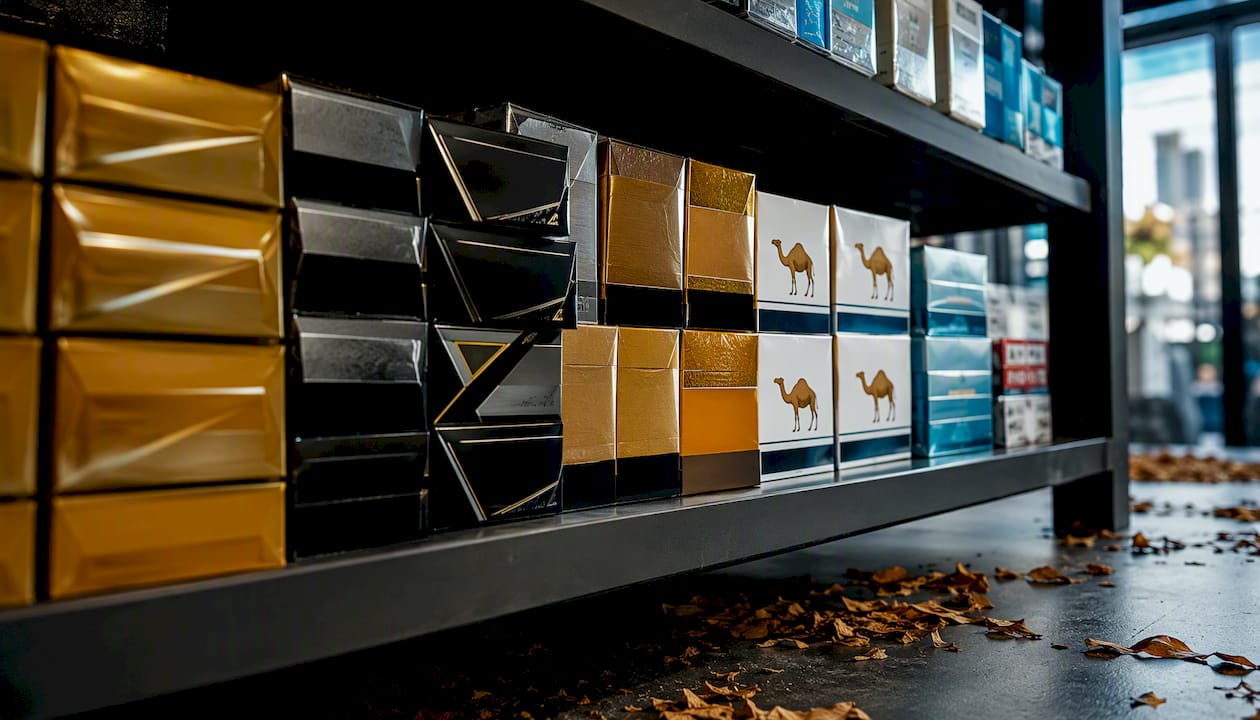
Browse the full tobacco range at Cigarettecentral for current pricing and deals, including up to 30% off selected lines.

How do Newcastle, NSW and Newcastle upon Tyne actually compare?
The two cities share a name, a coal-and-port heritage, and a post-industrial identity crisis that both have handled in different ways. Beyond that, they’re quite different places.
| Dimension | Newcastle, NSW (Australia) | Newcastle upon Tyne (England) |
|---|---|---|
| Setting | Pacific coast, river estuary, ocean beaches | River Tyne, inland from North Sea, no ocean beaches |
| Population | ~176,860 (city) | — |
| Industrial past | Coal export, steel, shipbuilding | Coal mining, shipbuilding, heavy engineering |
| Post-industrial path | Tourism, education, waterfront renewal, port | Cultural repurposing, Quayside regeneration, universities |
| Key landmark | Fort Scratchley, Bathers Way, Nobbys Beach | Medieval castle, Tyne Bridge, Sage Gateshead |
| University | University of Newcastle (NSW) | Newcastle University, Northumbria University |
| Climate | Subtropical, warm summers, mild winters | Temperate maritime, cool, frequently overcast |
| Search tip | Add “NSW” or “Australia” to your query | Add “upon Tyne” or “UK” to your query |
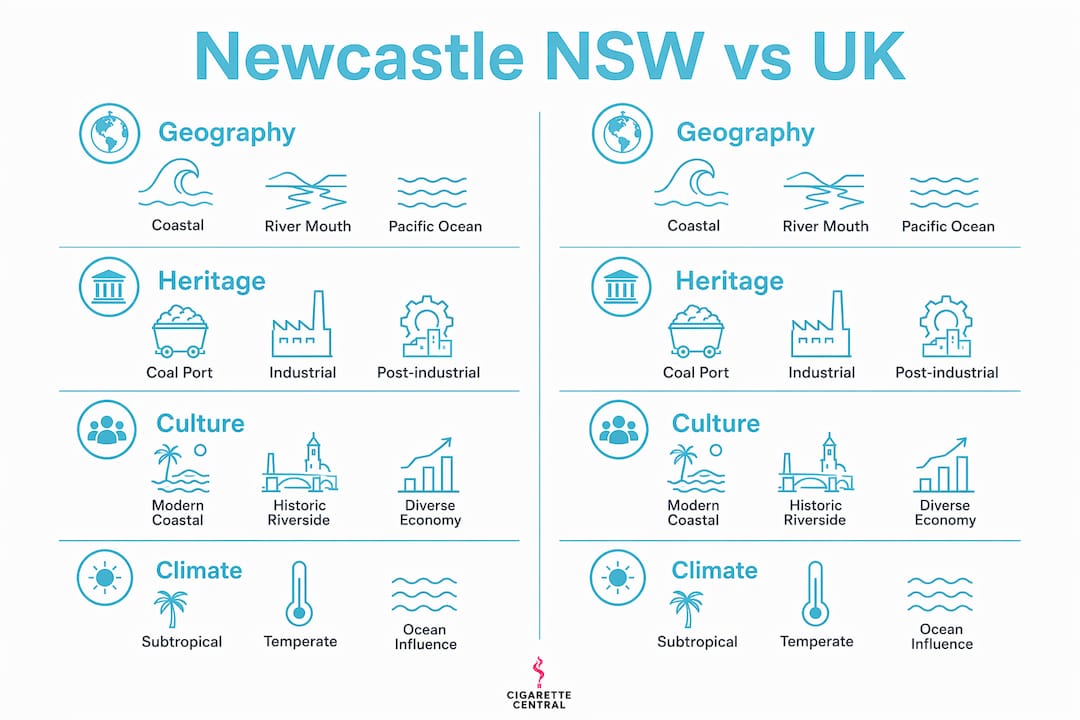
Academic research published in Buildings & Cities compared densification strategies in both cities and found they’re pursuing quite different urban futures: Newcastle, NSW is pursuing polycentric densification and waterfront projects, while Newcastle upon Tyne focuses on preserving a historical riverside core.
The cultural divergence is equally clear. Newcastle upon Tyne centres on a riverside historic core, medieval architecture and cultural repurposing of industrial buildings. Newcastle, NSW emphasises coastal tourism, harbour renewal and an outdoor lifestyle shaped by the Pacific.
When should you visit Newcastle, and where should you stay?
Best months: March through May (autumn) and September through November (spring) offer the most comfortable conditions for beach activities, walking and outdoor dining. Summer is popular but can be humid. Winter is mild and genuinely underrated for a quieter, cheaper visit.
Where to stay:
- Newcastle East and Cooks Hill: Best for walkability, heritage character and proximity to the ocean baths and Bathers Way
- Honeysuckle and the waterfront precinct: Good for light-rail access, restaurants and the harbour foreshore
- Hamilton: A short drive or bus ride from the beach, with a strong café and dining strip on Beaumont Street
- Merewether: Ideal if the beach is your priority; quieter than the CBD
Safety: Newcastle is generally a safe city. Standard urban precautions apply in the CBD at night, particularly around the entertainment precincts. The beaches are patrolled by Surf Life Saving NSW during summer months.
Accessibility: The Bathers Way is largely accessible for mobility aids along its paved sections. The Newcastle Museum and Art Gallery are fully accessible. Fort Scratchley has some uneven terrain, so check ahead if mobility is a consideration.
Quick checklist for visitors:
- Book accommodation in advance for summer weekends and major events (Newcastle Jazz Festival, This Is Not Art festival)
- Check surf conditions via Surf Life Saving NSW before swimming at unpatrolled beaches
- Download the Transport NSW app for real-time bus and light-rail timetables
- Confirm opening hours for Fort Scratchley and the Museum, as they vary seasonally
Thinking of relocating to Newcastle? Here’s what to know
Cost of living
Newcastle is meaningfully more affordable than Sydney across housing, rent and general living costs. Median rents and purchase prices vary by suburb, but the gap is substantial enough that many people who work remotely or in sectors with Newcastle-based employers make the move specifically for financial reasons. Utilities and groceries track broadly with NSW averages.
Job market
Health and education are the two most stable employment sectors, anchored by Hunter New England Health (which includes John Hunter Hospital) and the University of Newcastle. The port and logistics sector continues to employ a significant workforce. Retail, hospitality and construction are also active, particularly given ongoing CBD and waterfront development.
The NSW Government’s Business NSW resources (business.nsw.gov.au) and the City of Newcastle’s economic development pages are the most reliable starting points for current job-market data.
Visa considerations for international relocators
If you’re moving to Australia rather than within it, your visa pathway depends on your circumstances. The main skilled migration routes are the Skilled Independent visa (subclass 189), the Skilled Nominated visa (subclass 190, which NSW nominates for), and the Skilled Work Regional visa (subclass 491, which covers regional areas including the Hunter). Newcastle’s regional status can make it eligible for regional visa pathways, which sometimes carry lower points thresholds.
Study NSW (study.nsw.gov.au) is the government’s official resource for international students considering Newcastle as a study destination.
This is general information, not migration or legal advice. Visa eligibility rules change regularly. Confirm your options with a registered migration agent or the Department of Home Affairs.
Key takeaways
Newcastle, NSW is a coastal regional city of 176,860 people that has successfully diversified from a coal-and-port economy into education, health and tourism while retaining the Port of Newcastle as a major economic anchor.
| Point | Details |
|---|---|
| Primary city profiled | Newcastle, NSW, Australia — not Newcastle upon Tyne, England |
| Population and scale | 176,860 residents (2024); more than five million visitors a year |
| Economic anchors | Port of Newcastle, University of Newcastle, John Hunter Hospital |
| Top visitor draw | Bathers Way (6 km coastal walk), ocean baths, Fort Scratchley |
| Access from Sydney | Approximately 2.5–3 hours by car or rail; 20 minutes from Newcastle Airport |
Why Newcastle deserves more credit than it gets
Most people outside NSW still think of Newcastle as a former steel town that never quite recovered. That framing is about 25 years out of date. The waterfront renewal, the light rail, the restored ocean baths and the growth of the University of Newcastle have collectively produced a city that offers something genuinely rare in Australia: urban services and cultural life at a fraction of Sydney’s cost, with beaches on your doorstep.
The coal heritage is real and still economically relevant through the port. But the city’s identity has shifted. The Honeysuckle precinct, the Newcastle Art Gallery’s collection, the Beaumont Street dining strip in Hamilton — these aren’t consolation prizes for a city that lost its steelworks. They’re the result of deliberate investment and a community that decided what it wanted to be next.
For smokers in Newcastle looking for value on their tobacco spend, Cigarettecentral offers fast Australia-wide shipping, discreet packaging and a broad range of brands at discounted prices. Check the NSW tobacconists guide for local retail options, or order directly online.
Smoker FAQs: buying tobacco in and around Newcastle
Can I order cigarettes online and have them delivered to Newcastle?
Yes. Cigarettecentral ships Australia-wide, including to all Newcastle suburbs, with delivery in 2–5 business days and discreet packaging on every order.
What cigarette brands are available for Newcastle residents?
Cigarettecentral stocks Manchester Red, Manchester Light, Manchester Sapphire Blue, Dunhill Red England, Davidoff Gold, Double Happiness and loose tobacco options, among others. Browse the full range at cigarettecentral.com.
Is loose tobacco cheaper than pre-made cigarettes?
Loose tobacco generally offers a lower cost per smoke than pre-packaged cigarettes. The Premium Loose Tobacco 500g from Cigarettecentral is a popular option for roll-your-own smokers looking to reduce their spend.
Are there local tobacconists in Newcastle, NSW?
Yes, Newcastle has several tobacconists across the metropolitan area. The Cigarettecentral NSW tobacconists guide covers shops across Sydney, Newcastle, Wollongong and more.
Customer story
Mark, Newcastle East: “I’d been buying from a local shop for years, but the price kept going up. A mate told me about ordering online. I was sceptical about the delivery, but it arrived in three days, packaged discreetly, and the price was noticeably lower than what I’d been paying in-store. I’ve been ordering from Cigarettecentral ever since.”
Note: This reflects a typical customer experience. Individual delivery times may vary.
Tobacco brands popular across Australian cities and states
Smokers across Australia have different preferences by region. Here’s a snapshot of what’s popular in key markets:
- Sydney, NSW: Manchester Red and Dunhill Red England are consistent sellers among full-flavour smokers
- Melbourne, VIC: Davidoff Gold and Manchester Light are popular with smokers seeking a smoother blend
- Brisbane, QLD: Double Happiness Yellow and Manchester Sapphire Blue attract budget-conscious buyers
- Perth, WA: Manchester Slims Blue and Manchester Superslims Chocolate are popular in the slim-format category
- Adelaide, SA: Premium Loose Tobacco 500g is a strong seller among roll-your-own smokers
- Darwin, NT: Manchester Red and Double Happiness Gold are frequently ordered
- Hobart, TAS: Dunhill Red England and Davidoff Gold are the top premium picks
Cigarettecentral delivers to all of these cities and every postcode in between.
Where to verify facts and find current local information
The sources below are the most authoritative references for Newcastle, NSW facts, tourism data and civic services.
| Source | What it covers |
|---|---|
| City of Newcastle | Council services, planning, waste, community programmes |
| Newcastle Destination Management Plan 2021–2025 | Visitor economy data, strategic tourism goals |
| Visit Newcastle | Tourism, events, itineraries, visitor FAQs |
| City Insights — Economy | Population, employment and economic indicators |
| Buildings & Cities journal | Academic comparison of Newcastle, NSW and Newcastle upon Tyne |
| Cigarettecentral | Tobacco products, shipping, blog guides for Australian smokers |
Statistics in this article are drawn from the sources above. Population figures are from the 2024 City Insights data. Visitor economy figures come from the Newcastle Destination Management Plan 2021–2025. Check those primary sources directly for the most current numbers, as local data is updated periodically.
FAQ
What is Newcastle, NSW famous for?
Newcastle is famous for its ocean beaches, the Bathers Way coastal walk, the Port of Newcastle (one of the world’s largest coal-export terminals), and its post-industrial waterfront renewal. Fort Scratchley and the Newcastle Museum are also well-known heritage attractions.
Is Newcastle, Australia worth visiting?
Yes. With more than five million visitors a year and a visitor economy approaching $1 billion, Newcastle offers beaches, coastal walks, cultural venues and easy Hunter Valley access within a compact, walkable city.
Is Newcastle, Australia a nice place to live?
Newcastle consistently rates as one of Australia’s most liveable regional cities. It offers coastal lifestyle, strong health and education services, and housing costs significantly lower than Sydney, making it attractive for families, professionals and students.
Is Newcastle close to Sydney?
Newcastle is approximately 160 km north of Sydney, about 2.5–3 hours by car via the M1 or by NSW TrainLink rail service. Newcastle Airport is roughly 20 minutes from the city centre and offers direct flights to Sydney and other capitals.


