













TL;DR:
- Darwin is a tropical city ideal for exploring the Top End’s parks, markets, and cultural sites. It offers easy access to Kakadu, Litchfield, and Tiwi Islands, with activities and food reflecting its multicultural influence. Visiting during the dry season provides the best outdoor experience, while year-round safety precautions are essential around crocodiles and marine stingers.
Darwin is the tropical capital of the Northern Territory and the most practical base for exploring the Top End’s national parks, markets, and waterfront culture. Whether you’re planning a weekend stopover or a full week in the north, the city punches well above its weight. Kakadu National Park sits roughly 250 km east, Litchfield National Park is about 100 km south, and the city itself delivers Mindil Beach Sunset Markets, the Museum and Art Gallery of the Northern Territory (MAGNT), Crocosaurus Cove, and a waterfront precinct that draws visitors back every evening.
Three things to know before you book:
- Best season: The dry season offers clear skies, cooler nights, and full access to national park roads. The wet season is humid and dramatic, but some roads close and mozzies are relentless.
- What to expect: A compact, multicultural city of roughly 150,000 people with a strong Indigenous cultural presence, excellent street food, and a relaxed pace that surprises most first-timers.
- Accessibility: Darwin’s public buses run low-floor, ramp-equipped vehicles across the CBD and inner suburbs, and most major attractions have wheelchair access.
Darwin CBD sits at approximately 12.46°S, 130.84°E. Darwin International Airport is located relatively close to the city centre, making it convenient for transfers.
Table of Contents
- What are the best things to do in Darwin?
- Where should you eat and drink in Darwin?
- When is the best time to visit Darwin?
- How do you get to and around Darwin?
- What day trips can you do from Darwin?
- Is Darwin safe, and what do you need to know before you go?
- What does a 1-day, 3-day, or 7-day Darwin itinerary look like?
- Local tips and insider knowledge for Darwin visitors
- Key takeaways
- Darwin through a local lens
- Useful sources to check before and during your trip
- Stock up before you fly: Cigarettecentral delivers to Darwin
- FAQ
What are the best things to do in Darwin?
Darwin’s attractions are compact enough to cover most of them in two or three days, but each one rewards a longer look.
Mindil Beach Sunset Markets
Mindil Beach Sunset Markets run every Thursday and Sunday from late April to late October. Arrive at least 45 minutes before sunset to claim a patch of grass facing the water. The market draws around 60 food stalls covering Thai, Indonesian, Indian, and East Timorese cuisines alongside local arts and crafts. It’s the single experience most visitors name as their Darwin highlight.
Darwin Waterfront Precinct
The Darwin Waterfront Precinct is a man-made lagoon and wave pool complex built into the old wharf area. The lagoon is maintained as a croc-free swimming environment, which matters in the Top End where wild harbour swimming carries real risk from saltwater crocodiles and marine stingers. Restaurants and bars line the precinct, making it a reliable spot for lunch or a sundowner regardless of the season.
Crocosaurus Cove
Crocosaurus Cove on Mitchell Street puts you face-to-face with saltwater crocodiles in a way that is genuinely hard to find elsewhere. The “Cage of Death” lets you descend into a perspex enclosure surrounded by large crocs. It’s open daily and suits families, couples, and anyone who wants a wildlife experience without a full-day drive.
Museum and Art Gallery of the Northern Territory (MAGNT)
MAGNT is free to enter and covers natural history, maritime archaeology, and one of Australia’s most significant collections of Aboriginal and Torres Strait Islander art. The Cyclone Tracy gallery, documenting the 1974 storm that flattened Darwin, is quietly one of the most affecting museum experiences in the country. Allow two to three hours.
Deckchair Cinema
The Deckchair Cinema operates during the dry season on the waterfront, screening films under the stars with the harbour as a backdrop. It’s a Darwin institution. Bring a cushion, arrive early for a good spot, and check the programme ahead of time because popular screenings sell out.
Pro Tip: For Mindil Beach Sunset Markets, Thursday evenings are typically less crowded than Sundays. Arrive by 4:30 PM to secure a sunset-facing spot on the grass before the main rush.
Other experiences worth your time include sunset harbour cruises (book through local operators at the waterfront), jumping crocodile tours on the Adelaide River (about 60 km from Darwin), and the Parap Village Markets on Saturday mornings for a more local, less touristy atmosphere.
Where should you eat and drink in Darwin?
Darwin’s food scene reflects its geography and history. The city sits at the crossroads of Southeast Asia, the Pacific, and outback Australia, and the menus show it.

Parap Village Markets on Saturday mornings are where locals go. The laksa here is a Darwin ritual, thick and aromatic, served from stalls that have been operating for years. The market is smaller and more community-focused than Mindil, with fresh produce, Asian street food, and homemade goods at prices that reflect a local rather than tourist crowd.
Mindil Beach Sunset Markets double as Darwin’s best street-food event. Budget a moderate amount for a full meal from the stalls. The variety is genuinely impressive for a city of Darwin’s size.
The Darwin Waterfront Precinct steps up the price point. Restaurants along the strip cover modern Australian, seafood, and Asian fusion, with mains at a premium compared to markets. The outdoor seating and harbour views make it worth the premium for a dinner out.
Nightlife highlights and family-friendly options:
- Hanuman — in the CBD for upmarket Thai and Indian cuisine, a long-standing Darwin favourite
The Darwin Festival (held in August) brings food pop-ups and events to the CBD that are worth planning around if your dates align.
When is the best time to visit Darwin?
The dry season, May through October, is the clear recommendation for most visitors. Temperatures sit in the mid-20s to low 30s Celsius during the day, humidity drops significantly, and national park roads are fully open. Mindil Beach Sunset Markets, Deckchair Cinema, and most outdoor events run exclusively in this window.
The wet season (November–April) is a different experience. Monsoonal rains arrive in earnest by December, and daily downpours can be intense. Tourism Australia notes that locals increasingly value this period for its lush landscapes and spectacular electrical storms, and it attracts photographers and nature lovers who prefer fewer crowds and lower accommodation prices.
Darwin climate at a glance
| Season | Months | Avg. Day Temp | Rainfall | Notes |
|---|---|---|---|---|
| Dry | May–October | 30–32°C | Very low | Best for parks, markets, outdoor events |
| Wet | November–April | 31–33°C | Very high | Lush scenery, storm photography, some road closures |
| Build-up | October–November | 33–35°C | Increasing | High humidity, intense heat before rains break |
Climate data sourced from Bureau of Meteorology, Darwin Airport station (site number 014015).
The “build-up” period in October and November deserves a specific mention. Humidity climbs sharply before the rains arrive, temperatures peak, and locals often describe it as the most uncomfortable time of year. If you’re sensitive to heat and humidity, avoid October and November.
Pro Tip: Pack light, breathable clothing year-round. Add a compact rain jacket and insect repellent for the wet season, and a light fleece for dry-season evenings when air-conditioned venues can feel cold after a warm day outside.
Check the Bureau of Meteorology for live weather and any cyclone or flood warnings before outdoor plans, particularly between November and April.
How do you get to and around Darwin?
Getting there
Darwin International Airport handles direct flights from all major Australian capitals, with Qantas, Jetstar, Virgin Australia, and Air North operating regular services. The airport sits approximately 7 km from the CBD, and a taxi or rideshare to the city centre takes around 15 minutes. Shuttle services also run to major hotels.
Road-trippers arriving via the Stuart Highway from Alice Springs cover roughly 1,500 km, typically over two days. It’s a serious drive but a rewarding one for those who want to experience the outback transition into the Top End.
Getting around
- Public buses: — Darwin’s bus network covers the CBD, inner suburbs, and key attractions. Buses run low-floor vehicles with extendable ramps, making them accessible for wheelchairs and prams. Fares are low and the network is reliable for city-based sightseeing.
- 4WD hire: Recommended for anyone planning remote Top End exploration. Northern Territory tourism guidance notes that many attractions are reachable by road but remote access often requires higher clearance vehicles.
Where to stay
| Area | Best for | Vibe |
|---|---|---|
| CBD / Waterfront | Convenience, first-timers | Hotels, restaurants, walkable |
| Parap | Local feel, markets access | Cafés, residential, relaxed |
| Fannie Bay | Families, beach access | Quieter, close to MAGNT |
| Nightcliff | Local community, budget | Suburban, good for longer stays |
Budget expectations
| Trip type | Daily budget (approx.) | Suggested stay |
|---|---|---|
| Backpacker | $80–$120 | 2–3 days |
| Mid-range | $180–$280 | 3–5 days |
| Splurge | — | 5–7 days |
Cigarettecentral product comparison: tobacco options for your Darwin trip
If you smoke and you’re planning a stay in Darwin, stocking up before you travel can save you money. Cigarettecentral ships Australia-wide with delivery in 2–5 business days, so ordering ahead of your trip is straightforward.
| Product | Format | Flavour profile | Best for |
|---|---|---|---|
| Davidoff Red Cigarettes 20s x 10 Packs | 20s carton (10 packs) | Full flavour, European blend | Smokers wanting a premium full-flavour option |
| Davidoff Gold Cigarettes 20s x 10 Packs | 20s carton (10 packs) | Light, smooth | Those preferring a lighter smoke |
| Manchester Superslims Chocolate 20s x 10 Packs | 20s carton (10 packs) | Chocolate flavoured, superslim | Flavoured or slim-format preference |
| Premium Loose Tobacco 500g | 500g bulk | Rich blend, smooth rolling | Long-stay visitors, roll-your-own smokers |

Tobacco prices in Darwin, as across Australia, reflect excise duties that make local retail expensive. Ordering through Cigarettecentral at discounted prices before your trip is a practical way to manage that cost.
What day trips can you do from Darwin?
Darwin functions best as a base. The city itself is worth two to three days, but the surrounding Top End is where the Northern Territory’s most iconic landscapes sit.
- Kakadu National Park: Approximately 250 km east of Darwin, around 3 hours by road. Kakadu is a UNESCO World Heritage site covering wetlands, escarpment country, and some of Australia’s most significant Aboriginal rock art sites. A day trip is possible but two days gives you time to reach Ubirr and Yellow Water without rushing. A 4WD is recommended for some tracks, and visitor passes are required. Wet-season road closures affect access to some areas between November and April.
- Litchfield National Park: About 100 km south of Darwin, roughly 90 minutes by sealed road. Litchfield is more accessible than Kakadu and suits a single full day. The magnetic termite mounds, Wangi Falls, and Florence Falls are the headline draws. A standard hire car handles all the main sealed roads comfortably.
- Tiwi Islands: Located about 80 km north of Darwin across the Clarence Strait. Access is by ferry (approximately 2.5 hours) or a short scenic flight. The Tiwi Islands are home to the Tiwi people and offer a genuine cultural experience including art, football, and guided community visits. A permit is required for independent visits; most travellers book through a licensed tour operator. This is better treated as a full-day or overnight trip rather than a quick excursion.
Dry-season demand for guided Kakadu and Litchfield tours is high. Book at least two to three weeks ahead between June and September. For Tiwi Islands, contact tour operators directly to confirm permit requirements and seasonal availability.
Is Darwin safe, and what do you need to know before you go?
Darwin is generally safe for visitors who take normal precautions. The city has a relaxed atmosphere, and most visitor areas, including the waterfront, Mitchell Street, and the markets, are well-frequented and well-lit.
The specific risks in Darwin are environmental rather than crime-related for most tourists:
- Saltwater crocodiles: — Never swim in rivers, estuaries, or the harbour. The Darwin Waterfront lagoon is maintained as a croc-free zone, but wild water is not safe. This applies year-round, not just in the wet season.
For medical needs, Royal Darwin Hospital on Rocklands Drive is the major public hospital serving the city and the Top End region.
Respecting First Nations communities: Darwin has a strong Aboriginal and Torres Strait Islander cultural presence. When visiting communities, cultural sites, or attending cultural events, follow local guidance on photography and behaviour. Some areas require permits for entry. Ask before photographing people or ceremonies, and follow signage at rock art sites.
Accessibility: Darwin’s public buses are wheelchair-accessible with low floors and extendable ramps. MAGNT and the Darwin Waterfront Precinct both have strong accessibility provisions. Tourism Australia’s Darwin guide notes that official listings increasingly mark mobility-friendly options across the city’s attractions.
What does a 1-day, 3-day, or 7-day Darwin itinerary look like?
1-day Darwin highlights
- Lunch (12:30–1:30 PM): — Eat at the Darwin Waterfront Precinct. The lagoon area has casual options at every price point.
Transport: Fully doable by foot, e-scooter, and bus. No car needed.
3-day Darwin and Litchfield
- Day 2: — Hire a car and drive to Litchfield National Park (90 minutes). Visit the magnetic termite mounds, swim at Wangi Falls, and return to Darwin by early evening.
Transport: Car hire needed for Day 2. Days 1 and 3 manageable by public transport and e-scooter.
7-day Top End exploration
- Days 1–2: — Darwin city (MAGNT, Crocosaurus Cove, Waterfront, Mindil Markets).
Transport: 4WD hire recommended from Day 3 onwards for Kakadu’s remote tracks. Book Tiwi Islands tour at least two weeks ahead in dry season.
Local tips and insider knowledge for Darwin visitors
Darwin rewards visitors who slow down and pay attention to local rhythms. A few things most travel guides skip:
Parap Village Markets on Saturday mornings are the real local experience. The laksa stalls here are a Darwin institution, and the market reflects everyday community life rather than a curated tourist product. Arrive early in the morning before the best stalls sell out.
The build-up (October–November) is Darwin’s most challenging period. Humidity sits above 80% for weeks before the rains break, and locals describe a collective restlessness that comes with it. If you visit during this window, plan indoor activities for the middle of the day and save outdoor time for early morning.
Wet-season lightning displays are genuinely spectacular. Darwin sits in one of the world’s most active lightning zones, and watching a storm roll in over the harbour from a safe, elevated vantage point is an experience that dry-season visitors miss entirely. The Darwin Waterfront restaurants offer a front-row seat.
Accessibility wins: MAGNT is one of the most accessible museums in regional Australia, with lift access, wide galleries, and staff trained to assist visitors with mobility needs. The Darwin Waterfront lagoon has accessible entry points. For planning low-mobility journeys, the NT Government’s transport information at nt.gov.au covers bus routes and accessible services.
Market local: tobacco across the Top End
Smokers visiting Darwin from other parts of Australia often notice that retail tobacco prices in the Northern Territory reflect the same national excise structure as Sydney, Melbourne, or Brisbane. Whether you’re coming from Perth, Adelaide, or Hobart, the retail price at a Darwin servo or newsagent will be consistent with what you pay at home. Brands like Davidoff Red, Davidoff Gold, and Manchester Superslims are available through Cigarettecentral’s online store with delivery to Darwin and across the NT, which is worth knowing if you prefer to stock up before travelling rather than paying retail prices on arrival. For roll-your-own smokers on longer stays, the Premium Loose Tobacco 500g is a practical bulk option. See Cigarettecentral’s Northern Territory tobacco guide for more on local purchasing options across Darwin and Alice Springs.
Pro Tip: If you’re visiting during the wet season, embrace the storms rather than hiding from them. Darwin’s electrical storms are genuinely extraordinary. Watch from a covered outdoor space, keep away from open water and tall trees, and you’ll have a memory that most dry-season tourists never get.
Key takeaways
Darwin is the Northern Territory’s tropical capital and the most practical base for Kakadu, Litchfield, and Tiwi Islands, with the dry season (May–October) offering the best conditions for outdoor travel.
| Point | Details |
|---|---|
| Best season to visit | Dry season (May–October) gives clear skies, open park roads, and access to Mindil Markets and Deckchair Cinema. |
| Top city experiences | Mindil Beach Sunset Markets (Thursday and Sunday, April–October), MAGNT (free entry), Crocosaurus Cove, and the Waterfront lagoon. |
| Safety priority | Never swim in wild harbour or river water; saltwater crocodiles and marine stingers are present year-round in open water. |
| Day trip planning | Book Kakadu and Litchfield tours 2–3 weeks ahead in dry season; Tiwi Islands requires a permit and advance tour booking. |
| Cigarettecentral | Stocks Davidoff Red, Davidoff Gold, Manchester Superslims, and Premium Loose Tobacco 500g for delivery to Darwin and across Australia. |
Darwin through a local lens
There’s a particular quality to Darwin that’s hard to explain until you’ve been there. The city doesn’t try to be Sydney or Melbourne. It has its own pace, shaped by the seasons, the proximity to Southeast Asia, and the deep presence of Aboriginal culture that runs through everything from the food markets to the museum galleries. Locals talk about the build-up the way people in other cities talk about winter: something to endure, but also something that makes the break, when the rains finally arrive, feel like a genuine release.
What locals genuinely love is the access. You can be at a world-class wetland, a UNESCO heritage site, or a remote beach within two hours of the city. That kind of proximity to serious nature, combined with a functioning city with good food and cold beer, is rare in Australia.
A local’s tip: If you want Mindil Beach without the full crowd, go on a Thursday rather than Sunday, and arrive before 4:30 PM. You’ll get a better spot, shorter queues at the food stalls, and the same sunset.
Useful sources to check before and during your trip
Before you travel, bookmark these:
- Bureau of Meteorology (BOM): Check daily before any outdoor plans, particularly between October and April. BOM publishes cyclone warnings, flood alerts, and daily forecasts for Darwin Airport (station 014015).
- Tourism NT / Tourism Australia: Use australia.com for events, accessibility information, and seasonal travel advice. Tourism NT’s site covers park conditions and tour operator listings.
- Discover Darwin: The City of Darwin’s official visitor hub for local events, parking, transport, and market schedules.
- NT Parks visitor passes: Required for entry to Kakadu and other NT national parks. Purchase online before you travel.
- NT Government transport info: Check nt.gov.au for bus routes, accessible services, and current timetables.
Check BOM daily before outdoor activities. Check Tourism NT when booking tours or checking park access. Check Discover Darwin for current market and event schedules during your stay.
Stock up before you fly: Cigarettecentral delivers to Darwin
Retail tobacco prices in Darwin are the same as anywhere else in Australia, which means they’re high. Cigarettecentral offers discounted cigarettes and loose tobacco with delivery in 2–5 business days, discreet packaging, and secure payment processing — so you can order before your trip and have your preferred brand waiting.
The range covers full-flavour options like Davidoff Red Cigarettes, lighter alternatives like Davidoff Gold, flavoured superslims like Manchester Superslims Chocolate, and bulk rolling tobacco for longer stays. Sales of up to 30% off run regularly, and 24/7 customer support means any order issue gets resolved fast.
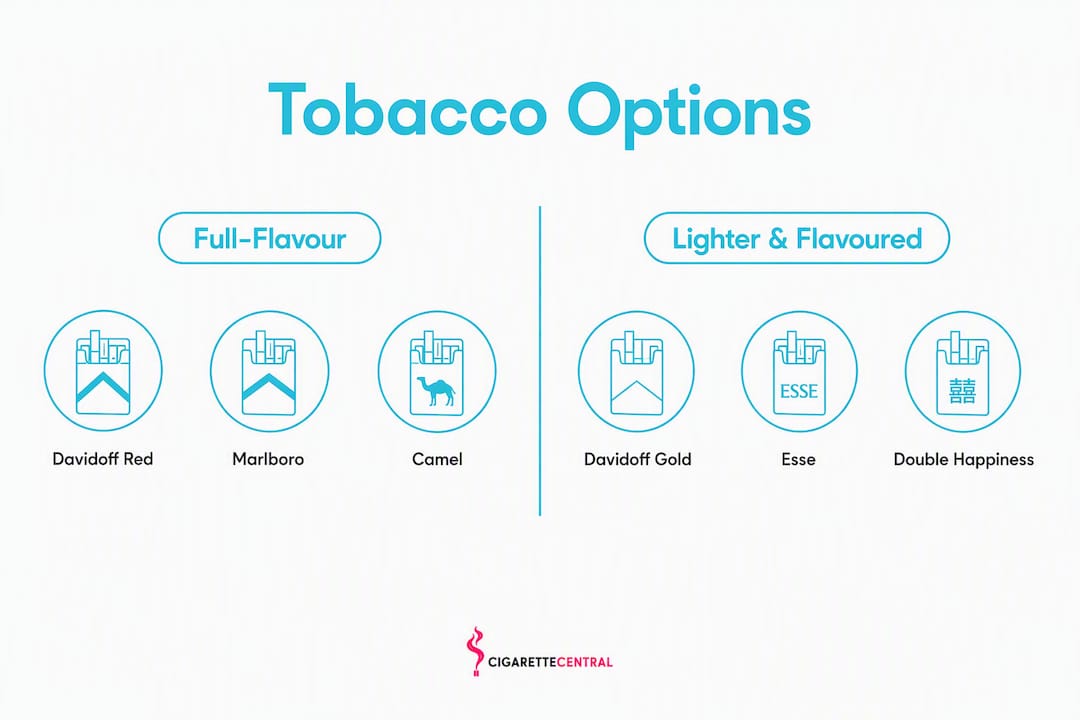
Browse the full tobacco range at Cigarettecentral and place your order before you travel.
This article covers general travel information. Tobacco products are for adults aged 18 and over. Always confirm current import, duty-free, and local regulations with the relevant Australian authority before purchasing.
FAQ
Is Darwin, Australia worth visiting?
Yes. Darwin offers a compact city experience with excellent food markets, wildlife attractions, and direct access to Kakadu and Litchfield national parks, making it a strong base for Top End travel.
What is Darwin famous for?
Darwin is known for Mindil Beach Sunset Markets, its proximity to Kakadu National Park, a strong multicultural food scene, and its history as the only Australian city bombed during World War II.
What is the crime rate like in Darwin?
Darwin is generally safe for tourists in visitor areas. Take standard precautions around Mitchell Street late at night, and be aware that environmental risks (crocodiles, marine stingers) are a more immediate concern for most visitors than crime.
Is Darwin a good place to live?
Darwin suits people who value outdoor access, a relaxed pace, and a multicultural community. The trade-off is the wet-season humidity and the build-up period, which many residents find challenging.
What do smokers need to know about buying tobacco in Darwin?
Retail tobacco prices in Darwin reflect Australia’s national excise structure and are consistent with other capital cities. Duty-free allowances for travellers arriving internationally are limited; check Cigarettecentral’s duty-free guide for current rules. Ordering online through Cigarettecentral before your trip is a practical way to access discounted prices with delivery direct to your Darwin accommodation.


