





TL;DR:
- Fine-cut tobacco is legally processed into uniform strands for rolling and must meet Australian packaging and health regulations. Loose tobacco often refers to illicit chop-chop, which is unregulated, unsafe, and carries legal penalties. Buying from licensed retailers with compliant packaging ensures safety, quality, and legal protection.
Fine-cut tobacco is defined as dried tobacco leaves processed into short, fine strands specifically for roll-your-own (RYO) cigarettes, while loose tobacco is a broader term that frequently refers to unregulated, illicit products such as chop-chop. Understanding what is fine-cut versus loose tobacco matters because the two carry very different legal, health, and quality implications for Australian smokers. Fine-cut tobacco sold legally must comply with the Public Health (Tobacco and Other Products) Act 2023, including plain packaging and mandatory health warnings. Loose tobacco, by contrast, often arrives in plastic bags with no labelling, no quality control, and serious legal consequences for buyers and sellers alike.
What is fine-cut versus loose tobacco in Australia?
Fine-cut tobacco is finely shredded for RYO cigarettes and is a legally defined product category under Australian law. The term “fine-cut” refers specifically to the strand width produced during processing, which is narrow enough to pack evenly into a rolling paper without clumping or tearing. This consistency is what separates it from coarser cuts used in pipe tobacco or the irregular chop found in illicit products.
Loose tobacco, on the other hand, is not a regulated product category in Australia. The phrase is used loosely (no pun intended) to describe anything from legal RYO blends sold in pouches to illegal chop-chop sold out of car boots. That ambiguity is exactly why the distinction matters. When you hear “loose tobacco” at a market stall or from an unlicensed seller, the product is almost certainly not legal fine-cut tobacco.
The fine-cut versus loose tobacco confusion is widespread among Australian smokers, particularly those new to rolling their own cigarettes. Knowing the difference protects you from health risks, legal trouble, and a genuinely poor smoking experience.
How is fine-cut tobacco regulated in Australia?
Fine-cut tobacco sold legally in Australia must meet strict requirements under the Public Health (Tobacco and Other Products) Act 2023. These rules cover packaging design, ingredient disclosure, and the banning of certain additives. The law exists to reduce the appeal of tobacco products while maintaining quality controls that protect consumers who choose to smoke.
Key requirements for legal fine-cut tobacco include:
- Plain packaging: Standardised olive-brown packaging with no logos, brand colours, or decorative elements
- Health warnings: Mandatory graphic health warnings covering a specified portion of the pack
- Ingredient disclosure: Manufacturers must disclose all additives and ingredients
- Additive bans: Flavourants such as menthol and other attractive additives are banned in legal products
- Excise tax compliance: Fine-cut tobacco is subject to excise, with tax equivalisation aligning RYO tobacco with manufactured cigarettes from September 2026
That last point is significant. The 2026 excise change means fine-cut tobacco pricing will shift, making it worth comparing your options now. Cigarettecentral stocks a range of compliant fine-cut and RYO products at competitive prices, so you can plan ahead without scrambling.
Pro Tip: When buying fine-cut tobacco, check that the pack carries plain olive-brown packaging and a graphic health warning. If it does not, the product is not legally compliant and you should not purchase it.
What is loose tobacco and why is it linked to illegal products?
Loose tobacco in the Australian context most commonly refers to chop-chop, which is untaxed, unregulated tobacco sold illegally. Chop-chop represents an estimated 40% of the loose tobacco market in Australia, with significant quantities seized by authorities each year. That figure alone tells you how widespread the problem is.
The health risks of chop-chop are serious and well-documented:
- Mould contamination: Poor drying processes leave moisture in the leaf, creating conditions for mould growth
- Pesticide residues: Unregulated growing means unknown chemical residues may be present in the tobacco
- Unknown additives: Without ingredient disclosure laws, anything can be added during processing
- Inconsistent burn: Irregular cut sizes produce uneven combustion, which affects both flavour and the compounds you inhale
The legal consequences for possession and sale of chop-chop are also severe. Penalties have increased under Australian law, with fine units valued at $330 as of 2024. Selling illicit tobacco is a criminal offence tied to tax evasion, and buyers can also face penalties. The government has ramped up enforcement, with regular seizures reported across New South Wales, Victoria, and Queensland.
Australian tobacco control professionals warn that loose tobacco in the market is frequently illicit, posing serious health and legal risks to consumers who may not realise what they are buying.
How do fine-cut and loose tobacco differ in cut, moisture, and smoking experience?
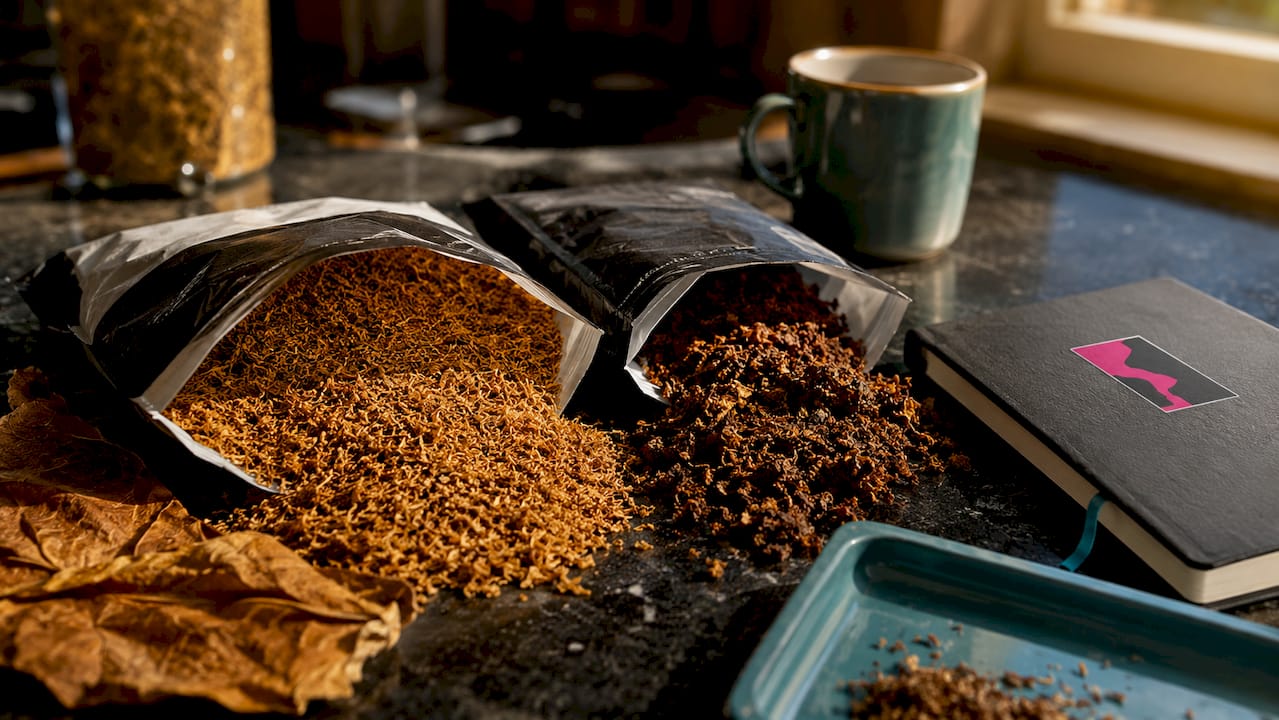
The physical differences between fine-cut and loose tobacco directly affect how each smokes. Fine-cut tobacco is dry and finely shredded for easy rolling and consistent burn, while pipe tobacco (a legal form of loose tobacco) uses rougher cuts and higher moisture for a slower burn. Illicit chop-chop sits in its own category entirely, with no consistent cut size or moisture standard.
| Feature | Fine-cut tobacco | Loose/pipe tobacco | Illicit chop-chop |
|---|---|---|---|
| Cut size | Fine, uniform strands | Coarser, ribbon or flake | Irregular, unpredictable |
| Moisture level | Low to medium | Higher | Variable, often too high |
| Burn rate | Consistent | Slower | Uneven |
| Rolling suitability | Excellent | Poor | Very poor |
| Legal status | Legal | Legal (pipe use) | Illegal |
| Quality control | Regulated | Regulated | None |
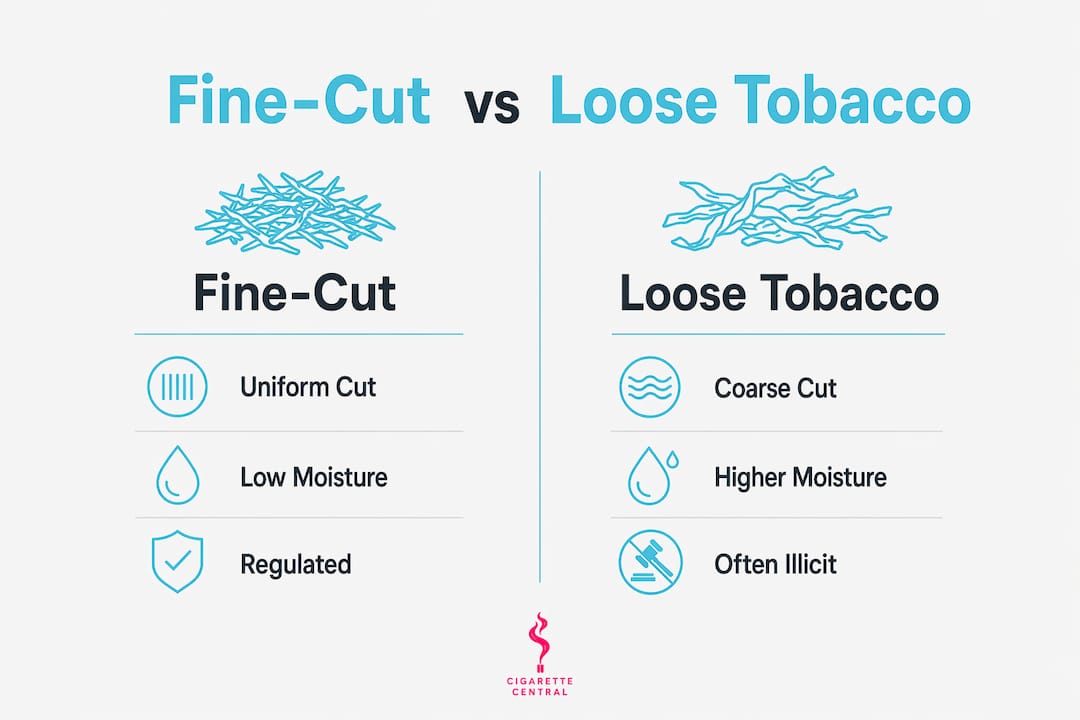
The fine strand structure of legal fine-cut tobacco is critical for a good smoking experience. It allows the tobacco to pack evenly into a rolling paper, creating the right density for a smooth draw. Coarser or irregular cuts create air pockets, which cause uneven burning and a harsher, more unpredictable smoke.
Moisture content also plays a bigger role than most smokers realise. Fine-cut tobacco is processed to a specific moisture level that keeps it pliable enough to roll without crumbling, but dry enough to burn cleanly. Chop-chop is often too wet, which causes it to burn poorly and produce a heavier, more irritating smoke.
Pro Tip: If your RYO tobacco feels overly wet or smells musty, do not use it. These are signs of poor storage or illicit product. Legal fine-cut tobacco from a reputable retailer has a clean, consistent smell and a slightly springy texture.
What should smokers consider when choosing between fine-cut and loose tobacco?
The most important factor is legality. Purchasing legal fine-cut tobacco from a licensed retailer protects you from criminal penalties and guarantees a minimum standard of quality. Buying from unlicensed sources, regardless of price, carries risks that no discount justifies.
Beyond legality, consider these practical factors:
- Your rolling skill: Fine-cut tobacco is forgiving for beginners because the even strand size makes it easier to roll a consistent cigarette. Coarser cuts require more technique.
- Packaging and labelling: Legal fine-cut tobacco always comes in plain olive-brown packaging with health warnings. No packaging means no compliance, and no compliance means no purchase.
- Flavour preferences: Legal fine-cut blends vary in strength and character. Exploring RYO tobacco brands from reputable retailers lets you find a blend that suits your palate without resorting to unregulated products.
- Cost versus risk: Chop-chop appears cheaper upfront, but the legal penalties, health risks, and poor smoking experience make it a false economy.
- Storage: Legal fine-cut tobacco comes in sealed pouches designed to maintain optimal moisture. Store opened pouches in an airtight container to preserve freshness.
A common misconception is that all “loose tobacco” sold at markets or through informal channels is the same as the RYO tobacco you buy at a licensed retailer. It is not. The top loose tobacco brands available from compliant retailers are processed, tested, and taxed products. What you buy from an unlicensed seller is none of those things.
Australian smokers share their experience
A customer from Brisbane put it plainly: “I tried chop-chop once years ago because it was cheap. The smoke was harsh, it burned unevenly, and I felt terrible afterwards. I went back to proper fine-cut and never looked back. The price difference isn’t worth the risk.”
A Melbourne-based roller who has been buying from Cigarettecentral for two years noted: “Knowing the product is legal and properly packaged gives me peace of mind. I know exactly what I’m getting, and the quality is consistent every time.”
Fine-cut tobacco across Australia: local market notes
Demand for legal fine-cut tobacco is strong in major cities and regional areas alike. Smokers in Sydney and Perth report growing awareness of the risks of illicit tobacco following recent enforcement campaigns. In Adelaide and Hobart, retailers note that smokers are increasingly asking for specific RYO blends by name, reflecting a more informed consumer base. The Queensland market has seen notable enforcement activity targeting chop-chop distribution networks, reinforcing why buying from licensed sources matters regardless of where you live.
Key takeaways
Fine-cut tobacco is a legally defined, regulated product for RYO cigarettes, while loose tobacco often refers to illicit chop-chop that carries serious health and legal risks in Australia.
| Point | Details |
|---|---|
| Fine-cut is legally defined | Fine-cut tobacco is processed into uniform fine strands and must comply with the Public Health (Tobacco and Other Products) Act 2023. |
| Loose tobacco often means illicit product | Chop-chop represents an estimated 40% of the loose tobacco market and is linked to mould, pesticides, and criminal penalties. |
| Cut size affects smoking quality | Fine strands produce consistent burn and smooth draw; irregular cuts from illicit sources burn unevenly and harshly. |
| Legal penalties are real | Selling or possessing chop-chop is a criminal offence, with fine units valued at $330 as of 2024. |
| Buy from licensed retailers | Plain olive-brown packaging with health warnings is your clearest signal that a product is legal and quality-controlled. |
What I’ve learned from years of watching smokers navigate this confusion
The fine-cut versus loose tobacco question trips up a lot of Australian smokers, and I understand why. The terminology is genuinely inconsistent. Retailers sometimes label legal RYO products as “loose tobacco,” and that overlaps directly with the language used to describe chop-chop. The result is that smokers who think they are making an informed choice are sometimes flying blind.
What I find most telling is the health gap between the two. Legal fine-cut tobacco carries the well-known risks of any tobacco product. Chop-chop adds a second layer of risk on top of that, with mould, unknown chemicals, and inconsistent combustion. You are not just accepting the standard risks of smoking. You are accepting unknown additional risks for a product that also smokes worse.
The excise tax changes coming into effect in September 2026 will push fine-cut tobacco prices higher. I expect that will drive some smokers toward illicit sources as a cost-cutting measure. That is the wrong call. The penalties, the health risks, and the genuinely poor experience make chop-chop a bad deal at any price. Buying smart means buying legal, and buying legal means knowing what fine-cut tobacco actually is.
— Cigarettecentral
Legal fine-cut tobacco, delivered to your door
Cigarettecentral stocks a full range of legal, compliant fine-cut and RYO tobacco products for Australian smokers who want quality without the risk.

Every product ships in discreet, compliant packaging within 2–5 business days, with 24/7 customer support and secure payment processing. You get the peace of mind that comes with buying from a licensed retailer, plus competitive pricing that makes legal tobacco genuinely affordable. Browse the full tobacco product range at Cigarettecentral and find the fine-cut blend that suits your rolling style and taste. Current sales offer up to 30% off selected products, so now is a good time to stock up legally and confidently.
FAQ
What is the difference between fine-cut and loose tobacco?
Fine-cut tobacco is legally processed into uniform fine strands for RYO cigarettes and must comply with Australian plain packaging laws. Loose tobacco is a broad term that often refers to illicit chop-chop, which is unregulated, untaxed, and illegal.
Is loose tobacco legal in Australia?
Legal RYO tobacco sold in compliant packaging is legal. The term “loose tobacco” frequently refers to chop-chop, which is illegal due to tax evasion and unregulated production. Always check for plain olive-brown packaging and health warnings before purchasing.
Why does fine-cut tobacco burn more evenly than chop-chop?
The uniform fine strands in legal fine-cut tobacco allow for consistent packing density and even combustion. Chop-chop has irregular cut sizes and inconsistent moisture, which causes uneven burning and a harsher smoke.
What are the penalties for buying chop-chop in Australia?
Possession and sale of chop-chop are criminal offences under Australian law. Penalties have increased significantly, with fine units valued at $330 as of 2024, and sellers face prosecution for tax evasion.
How do I know if my tobacco is legal fine-cut or illicit loose tobacco?
Legal fine-cut tobacco always comes in plain olive-brown packaging with mandatory graphic health warnings and ingredient disclosure. If the product has no packaging, no health warnings, or arrives in a plain plastic bag, it is almost certainly illicit.
Recommended
- Imported Loose Tobacco in Australia with Premium Freshness & Quali – Cigarette Central
- Top Loose Tobacco Brands for Everyday Rolling Cigarettes in Australia – Cigarette Central
- How to choose between tobacco product types in Australia – Cigarette Central
- Golden Virginia vs Drum Blue Tobacco – Loose Tobacco Comparison (Austr – Cigarette Central


