





TL;DR:
- Online tobacco promotions use social media, influencers, and peer sharing to bypass advertising bans. They increase youth exposure and influence adult purchasing, despite legal restrictions and regulatory efforts. AI tools like SCANNER help monitor and address the evolving digital tobacco marketing landscape.
Online tobacco promotions are defined as digital marketing activities used by tobacco companies to advertise, normalise, and sell tobacco products through internet-based channels, including social media, influencer content, and retailer reward systems. Despite Australia’s comprehensive broadcast advertising bans, the role of online tobacco promotions has grown significantly, with 61% of young social media users encountering tobacco content in a 2024 study. The Public Health (Tobacco and Other Products) Act 2023 now mandates annual reporting on promotional expenditure, but enforcement across global digital platforms remains a serious challenge. Understanding how these promotions operate, who they target, and what regulators are doing about them is critical for anyone tracking tobacco market trends in Australia.
How do online tobacco promotions work and evade advertising bans?
Tobacco companies pivoted from traditional broadcast advertising to covert digital marketing tactics once broadcast bans took effect. The shift was deliberate. Social media algorithms amplify content based on engagement, not origin, which means a single post from an overseas account can reach millions of Australian users without triggering local advertising laws.
The most common tactics include:
- Influencer endorsements (“cig-fluencers”): Paid content creators post tobacco-related material that looks organic, making it nearly impossible for viewers to identify it as advertising.
- Peer-to-peer sharing: Tobacco content spreads through shares and reposts, removing the brand from direct association with the promotion.
- Lifestyle and humour framing: Posts associate tobacco and vaping with social status, relaxation, or comedy rather than making direct product claims.
- Retailer reward systems: Tobacco companies incentivise retailers with bonuses tied to sales targets, which indirectly drives promotional activity at the point of sale and online.
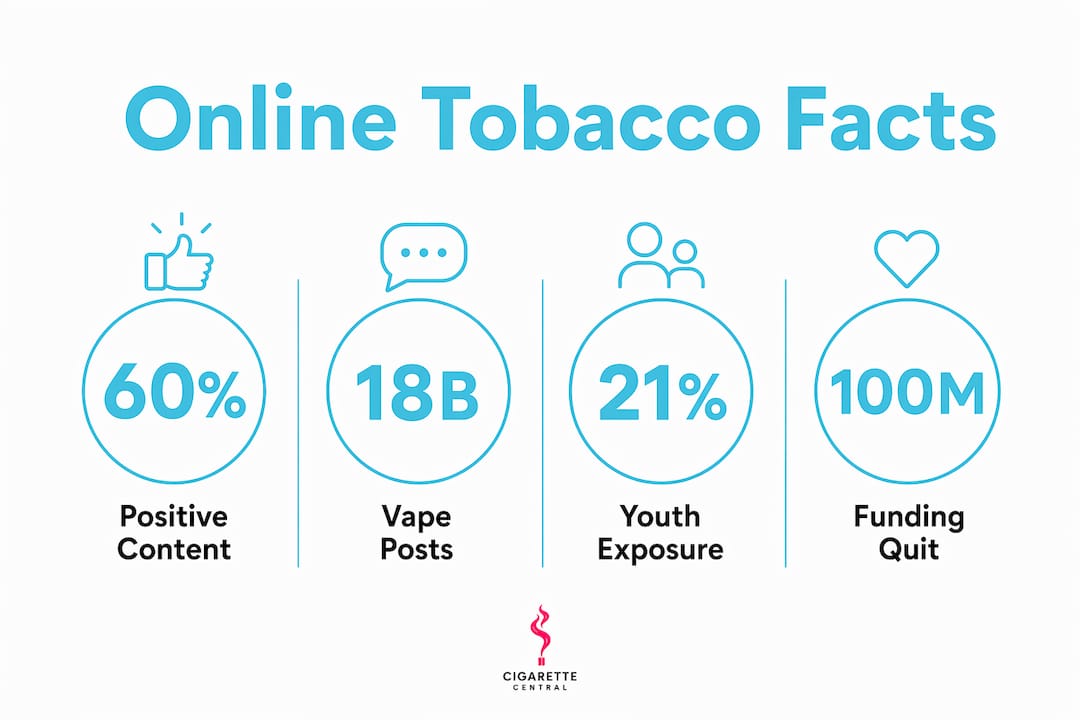
Social media tobacco content is predominantly positive at 60%, and paid advertising is often indistinguishable from organic posts. That blurring of lines is the core problem for regulators. The transnational nature of social media means content created in the United States or the United Kingdom reaches Australian teenagers just as effectively as locally produced material, yet sits outside the reach of Australian law.
Pro Tip: If you want to understand how online tobacco sales effectiveness is shaped by these tactics, look at engagement metrics on tobacco-related hashtags rather than follower counts. Engagement tells you far more about actual reach.
What is the impact of online tobacco promotions on youth tobacco use?
Exposure to online tobacco branding among Australian youth increased from 21% in 2010 to 29% in 2013, and the trend has continued upward with the rise of TikTok and Instagram. Higher exposure directly correlates with increased smoking susceptibility among never-smokers aged 12–17. That correlation is not coincidental. It reflects a well-documented mechanism where repeated positive exposure normalises a behaviour before a young person has formed firm attitudes against it.
“Renormalising smoking behaviour on social media poses a public health crisis, driven by influencer content that skirts broadcast laws. Young people who see tobacco portrayed as a lifestyle choice, rather than a health risk, are measurably more likely to experiment with smoking.”
The data on vaping content is particularly striking. TikTok alone carries over 18.1 billion posts tagged with #vape, the vast majority of which promote e-cigarettes positively. That volume dwarfs any public health counter-messaging currently deployed on the same platform.
| Metric | Finding |
|---|---|
| Youth exposure to online tobacco branding (2010) | 21% of Australian youth aged 12–17 |
| Youth exposure to online tobacco branding (2013) | 29% of Australian youth aged 12–17 |
| Social media users encountering tobacco content (2024) | 61% of young social media users |
| TikTok posts tagged #vape | Over 18.1 billion posts |
| Social media tobacco content that is positive in tone | 60% of posts reviewed |
The purchasing behaviour impact is equally clear. Young people who engage with tobacco content online are more likely to recognise brands, develop brand preferences, and eventually make purchases. The benefits of buying tobacco online are real for adult consumers seeking convenience and price, but the same digital accessibility that serves adults also lowers barriers for underage buyers when age verification is weak.
What regulations govern online tobacco promotions in Australia?
The Public Health (Tobacco and Other Products) Act 2023 is the primary legislative instrument governing tobacco marketing in Australia. It mandates annual reporting on promotional expenditure, influencer partnerships, retailer reward systems, product ingredients, and sales volumes. The intent is to create a transparent record of how tobacco companies spend their marketing budgets and who they partner with.
The reporting requirements cover:
- Total promotional expenditure broken down by channel
- Details of influencer and celebrity partnerships
- Retailer incentive and reward programme disclosures
- Product ingredient and volume data
- Any new product launches or formulation changes
Enforcement, however, faces structural limits. Australian regulators can act against domestic companies and local social media accounts, but content created overseas and shared organically sits in a legal grey area. The transnational reach of social media means a promotional campaign produced in another country can saturate Australian feeds without a single dollar of Australian promotional expenditure being declared.
Since 2023, the Australian Government invested over $100 million in quit initiatives, including influencer-led youth vaping campaigns that reached 7.7 million views across videos and posts. That investment signals the government recognises the scale of the problem, even if legislative tools have not yet caught up with the speed of digital marketing.
What methods are used to monitor and counter online tobacco marketing?
Monitoring online tobacco marketing at scale is genuinely difficult. Personalised algorithms mean two users on the same platform see entirely different content, making it hard to measure population-level exposure through traditional survey methods alone.
The most significant development in 2026 is the deployment of AI-based detection tools. The SCANNER system detects online tobacco marketing with over 97% accuracy and operates more than 12 times faster than manual review. That speed matters because tobacco content is posted continuously and at volume. Manual monitoring simply cannot keep pace.
| Monitoring method | Strengths | Limitations |
|---|---|---|
| AI detection (SCANNER) | 97%+ accuracy, 12x faster than manual | Requires ongoing training data |
| Survey-based research | Captures self-reported exposure | Misses algorithmically targeted content |
| Platform audits | Direct access to ad libraries | Platforms control data access |
| Mass media anti-smoking campaigns | Proven population-level effect | Requires 400+ TARPs per month to work |
Research targeting Australians aged 8–25 is now underway to quantify online exposure levels using AI and image recognition technology. This fills a critical gap. Without reliable exposure data, it is impossible to measure whether counter-campaigns are working or whether regulatory changes are having any effect.
On the counter-messaging side, mass media anti-smoking campaigns require at least 400 Target Audience Rating Points (TARPs) per month to achieve a measurable population-level effect. Most current campaigns fall below that threshold. Only high-intensity, emotionally impactful campaigns have proven effective against the volume and sophistication of online tobacco marketing.
Pro Tip: Public health researchers tracking the impact of online tobacco advertising should look at SCANNER’s methodology. It offers a replicable framework for large-scale digital content analysis that goes well beyond keyword searches.
Tobacco brands and buying behaviour across Australian cities
The digital promotion of tobacco products plays out differently across Australia’s major markets. In Sydney and Melbourne, where social media penetration is highest, brands like Davidoff, Manchester, and Double Happiness maintain strong recognition among adult smokers who regularly encounter product content through online retail channels. In Brisbane, Perth, and Adelaide, the shift toward online purchasing has been driven partly by convenience and partly by the lower cost of online tobacco compared to bricks-and-mortar retail.
Smokers in regional Queensland and rural New South Wales have increasingly turned to online platforms as local retail options narrow. The combination of fast delivery and competitive pricing makes online purchasing practical for these customers. Cigarettecentral serves customers across all Australian states, offering brands including Davidoff Red, Davidoff Gold, Manchester Superslims, Manchester Slims Blue, and Double Happiness across both hard pack and slim formats.
Customer feedback
One customer from Brisbane shared this experience: “I was spending a fortune at my local servo. Switching to Cigarettecentral saved me a noticeable amount each month, and the delivery was faster than I expected. The packaging was discreet, which I appreciated.” A Melbourne customer noted: “The range is genuinely better than what I can find locally. I found my preferred brand in stock when local shops had run out.”
These responses reflect a broader pattern. Australian smokers are increasingly treating online retail as their primary channel, not a backup option.
Key takeaways
Online tobacco promotions operate through social media and influencer content to bypass traditional advertising bans, directly influencing youth tobacco uptake and adult purchasing behaviour in Australia.
| Point | Details |
|---|---|
| Digital promotions bypass broadcast bans | Tobacco companies use influencers and peer sharing to reach Australian youth outside local law. |
| Youth exposure is rising and measurable | Exposure among Australian youth aged 12–17 grew from 21% in 2010 to 29% in 2013, with further growth since. |
| Regulations require annual reporting | The Public Health (Tobacco and Other Products) Act 2023 mandates disclosure of influencer partnerships and promotional spend. |
| AI tools are closing the monitoring gap | SCANNER detects tobacco marketing with over 97% accuracy, enabling large-scale exposure research. |
| Counter-campaigns need high intensity | Anti-smoking campaigns require 400+ TARPs per month to achieve measurable population-level impact. |
The uncomfortable truth about digital tobacco marketing
From where I sit, the most underappreciated aspect of online tobacco promotions is how effectively they exploit the gap between where regulation was written and where marketing actually happens. Australian law was built for broadcast media. Social media is not broadcast. It is personalised, transnational, and algorithmically amplified in ways that no advertising standards body anticipated when the original bans were drafted.
The $100 million government investment in quit campaigns is meaningful, but it is competing against an industry with far greater resources and a platform architecture that inherently favours engagement over public health. A post that makes vaping look appealing gets shared. A post that explains lung disease statistics does not. That asymmetry is structural, not accidental.
What I find genuinely promising is the SCANNER technology. If researchers can map exposure at population scale, regulators finally have the evidence base to argue for platform-level obligations, not just company-level reporting. The 2023 Act’s reporting requirements are a start, but mandatory reporting on what companies spend is not the same as controlling what content reaches young people. The next policy frontier is platform accountability. Until social media companies face direct obligations under Australian law, the gap between intent and outcome will remain wide.
— Cigarettecentral
Tobacco products available at Cigarettecentral
Cigarettecentral is an Australian online tobacco retailer offering a wide range of products at competitive prices, with delivery in 2–5 business days and discreet packaging as standard.
Whether you prefer full-flavour blends, slim formats, or loose tobacco, the full tobacco collection at Cigarettecentral covers the major brands stocked by Australian smokers. Popular options include Davidoff Red Cigarettes in 20s x 10 packs, a full-flavour European blend consistently in demand. Secure payment processing and 24/7 customer support mean you can place an order with confidence at any time. Savings of up to 30% off are available on selected lines, making Cigarettecentral a practical choice for Australian smokers who want quality without overpaying.
FAQ
What is the role of online tobacco promotions in Australia?
Online tobacco promotions are digital marketing activities, including influencer content, social media posts, and retailer incentives, that tobacco companies use to reach consumers despite traditional advertising bans. They are the primary channel through which tobacco brands now build awareness and drive purchasing behaviour.
How do tobacco companies promote products online without breaking the law?
Tobacco companies use overseas influencers, peer-sharing networks, and lifestyle content that does not make direct product claims, exploiting the transnational nature of social media to reach Australian audiences outside the reach of local advertising law.
What does the Public Health (Tobacco and Other Products) Act 2023 require?
The Act requires tobacco companies to submit annual reports disclosing promotional expenditure, influencer partnerships, retailer reward programmes, and product ingredient data to the Australian Government Department of Health.
How does online tobacco advertising affect young people?
Exposure to online tobacco branding correlates directly with increased smoking susceptibility among never-smokers aged 12–17. Research shows that 61% of young social media users encountered tobacco content in 2024, and positive framing normalises smoking as a lifestyle choice.
What tools are used to detect online tobacco marketing?
The SCANNER AI system detects online tobacco marketing with over 97% accuracy and operates more than 12 times faster than manual review. It is currently being used in Australian research targeting people aged 8–25 to quantify digital exposure levels.


