





Online tobacco is cheaper than retail because it avoids the layers of tax and distribution costs built into every pack sold at a corner store or petrol station. For Australian smokers, those layers are significant. Federal excise, GST, and state levies push retail tobacco prices among the highest in the world. Online sellers, particularly those operating through Indigenous production channels or direct import models, sidestep many of these costs entirely. The result is a price gap that can reach up to 80% in some cases, and understanding why online tobacco costs less puts you in a much stronger position as a buyer.
Why online tobacco costs less: the tax structure explained
Australian tobacco taxes are the single biggest reason retail prices are so high. Every pack sold through a traditional retailer carries federal excise duty, a 10% GST on top of that, and in some cases additional state levies. These taxes are not a minor line item. Tobacco tax can account for the majority of the final retail price per pack, which is why a carton at a servo or supermarket costs what it does.
The key taxes driving retail tobacco prices in Australia include:
- Federal excise duty: Applied per stick, this is the largest component of retail tobacco pricing and increases regularly with indexation.
- GST: A flat 10% applied to the total sale price, including the excise component, which compounds the tax burden.
- State and territory levies: Some jurisdictions apply additional charges that vary by location.
- Retail margin: On top of all taxes, the retailer adds their own margin to cover rent, staff, and overheads.
The critical point is that certain online vendors, particularly those operating through Indigenous production frameworks, are exempt from federal and provincial tobacco taxes, which can represent 65–75% of the retail price. That exemption is not a loophole. It is a legally recognised right tied to Indigenous production and trade. For Australian smokers doing a tobacco price comparison, this distinction explains the most dramatic price differences you will find.
How do retail and online tobacco supply chains compare?
The supply chain behind a pack of cigarettes at your local shop involves more steps than most buyers realise. Each step adds cost, and that cost lands on you at the register.
| Factor | Traditional retail | Online seller |
|---|---|---|
| Intermediaries | Manufacturer → wholesaler → distributor → retailer | Manufacturer → online seller → buyer |
| Storefront costs | High rent, utilities, staff wages | Warehouse only, minimal staff |
| Stock volume | Limited shelf space, smaller orders | Bulk purchasing, larger volume |
| Markup layers | Multiple margins at each stage | Single margin at point of sale |
| Price flexibility | Fixed retail pricing | Promotional pricing, bulk discounts |
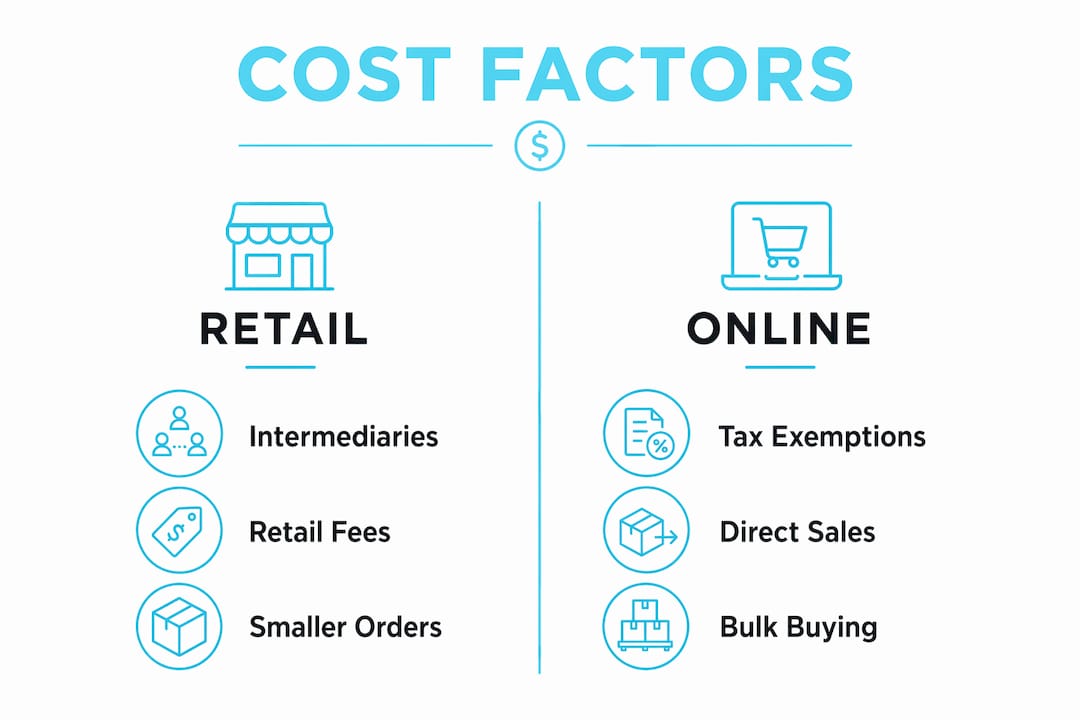
Eliminating wholesalers, distributors, and retail franchise fees accounts for $10–$25 savings per carton before any tax differences are factored in. That is a structural saving, not a promotional one. Online sellers carry lower fixed costs because they do not pay for a shopfront, a large retail team, or the logistics of stocking hundreds of product lines across physical locations.
Bulk volume purchasing is the other major lever. Online sellers order in larger quantities, which lowers their per-unit cost from suppliers. Those savings flow through to the buyer in the form of lower per-carton pricing. Online cartons are typically priced at 20–30% less than retail equivalents, even before Indigenous tax exemptions are applied.
Pro Tip: When comparing prices, calculate cost per stick rather than cost per pack. Some online packs contain 25 cigarettes versus the standard retail 20, which makes the per-stick saving larger than the headline price suggests.
Why do Indigenous tobacco rights affect online pricing?
Indigenous tobacco production is the most misunderstood factor in online tobacco pricing. The price difference is legal, structural, and significant.
In Australia and comparable markets like Canada, Indigenous producers operate under frameworks that recognise their right to produce and sell tobacco without the full burden of federal and state taxes applied to mainstream commercial tobacco. Tobacco sold through Indigenous channels is exempt from most federal and provincial tobacco taxes, which can represent 65–75% of the retail price. That exemption translates directly into lower shelf prices for buyers.
Key facts about Indigenous tobacco and online pricing:
- Legal status: Indigenous tobacco production and sale operates under recognised legal exemptions, not grey-market activity.
- Quality standards: These products meet the same standardised health warning and packaging regulations as mainstream tobacco.
- Price impact: The tax saving alone can reduce per-carton costs dramatically compared to standard retail.
- Misconceptions: Lower prices do not indicate lower quality. The price difference is entirely structural.
“Price differences are structural and legal, driven by tax exemptions and supply chain efficiencies, not by product quality or legality issues.” — supersmokes.ca
For Australian smokers, the practical takeaway is straightforward. When you see a significant price gap between an online seller and your local tobacconist, the gap is almost always explained by tax exemptions and supply chain savings, not by any compromise on the product itself.
How does bulk buying change the cost of tobacco online?
Buying habits have a bigger impact on what you pay than most smokers acknowledge. The corner store is the most expensive place to buy tobacco, and the reason is simple: you are buying reactively, one pack at a time, with no alternatives and no leverage.
Online purchasing flips that dynamic. Switching to online tobacco represents a shift from reactive buying to deliberate, planned purchasing that gives you genuine price control. Here is how that plays out in practice:
- Plan your purchase in advance. Buying a carton or more at once locks in a lower per-pack price and removes the premium you pay for convenience at a servo.
- Compare across sellers before you commit. Online platforms let you check prices across multiple products and brands in minutes, something impossible at a physical store.
- Buy in bulk to access volume pricing. Many online sellers offer further discounts on larger orders, such as bulk loose tobacco by the kilogram, which lowers your per-gram cost significantly.
- Avoid last-minute purchases. Reactive last-minute tobacco purchases at convenience stores are the most expensive option available. Planning a fortnightly or monthly online order eliminates that cost entirely.
Pro Tip: Order before you run out. Buying under pressure at a petrol station costs you more per stick than almost any online option. A standing fortnightly order online is the simplest way to keep costs predictable.
Are cheaper online tobacco products lower quality?
Lower price does not mean lower quality. This is the most common misconception among smokers who have not yet bought tobacco online.
All tobacco products meet standardised health warning and packaging regulations regardless of where they are sold. An online seller cannot legally sell tobacco in Australia without meeting the same packaging and labelling requirements as a retail tobacconist. The plain packaging laws, graphic health warnings, and product standards apply across every channel.
What to look for when choosing a reputable online tobacco seller:
- Clear product descriptions: Reputable sellers list brand, origin, pack size, and weight accurately.
- Secure payment processing: Look for standard payment security indicators before entering card details.
- Transparent shipping terms: Delivery timeframes and tracking should be stated clearly before purchase.
- Customer support access: A seller with accessible support is far less likely to be operating outside legitimate channels.
- Consistent pricing: Prices that are dramatically lower than any competitor warrant closer scrutiny, but a 20–30% saving compared to retail is entirely normal and explained by the factors covered above.
Regular online buyers rarely return to high-cost traditional retail once they experience the combination of lower prices, broader selection, and reliable delivery. That pattern reflects genuine satisfaction, not just price sensitivity.
Key takeaways
Online tobacco costs less because of tax exemptions, fewer supply chain intermediaries, and the shift from reactive to planned bulk purchasing — not because of any difference in product quality.
| Point | Details |
|---|---|
| Tax is the biggest cost driver | Tobacco taxes can represent 65–75% of the retail price, and some online channels avoid most of these. |
| Supply chain savings are structural | Eliminating wholesalers and retail overheads saves $10–$25 per carton before tax differences apply. |
| Bulk buying lowers per-unit cost | Buying online in carton or kilogram quantities reduces your cost per stick compared to single-pack retail. |
| Quality is not compromised | All tobacco sold legally in Australia meets the same packaging and health warning standards regardless of channel. |
| Planned purchasing beats reactive buying | Ordering online in advance removes the premium you pay for last-minute convenience store purchases. |
What I’ve learned watching Australian smokers switch to online buying
Watching the shift in how Australian smokers buy tobacco over the past several years has been genuinely interesting. The buyers who save the most are not the ones chasing the lowest advertised price. They are the ones who understand why the price is lower and buy with that knowledge in mind.
The biggest mistake I see is treating online tobacco as a risky or unfamiliar category. The price gap is real, legal, and explained entirely by tax structures and supply chain economics. Consumer trust in online tobacco suppliers builds through predictable pricing and reliable service, and that trust is well-placed when you choose a seller who is transparent about their products and shipping.
My practical advice: start with a carton rather than a single pack to see the savings in real terms. Check that the seller lists clear delivery timeframes and has accessible customer support. And stop buying from the servo out of habit. That habit is the most expensive one you have.
— Cigarettecentral
Cigarettecentral: quality tobacco online with fast Australian delivery
Australian smokers looking for cheaper online tobacco options with reliable service will find Cigarettecentral worth a look. The range covers popular cigarette brands and bulk loose tobacco at prices that reflect the supply chain and tax advantages covered in this article.
Cigarettecentral offers delivery within 2–5 business days, discreet packaging, and 24/7 customer support. Savings of up to 30% are available across the range, with secure payment processing on every order. Whether you are buying a carton of Manchester Light cigarettes or a kilogram of premium loose tobacco, the pricing reflects genuine structural savings rather than a compromise on quality.
FAQ
Why are cigarettes cheaper online than in stores?
Online sellers avoid multiple layers of retail tax, wholesaler margins, and storefront costs that push up in-store prices. Supply chain savings alone account for $10–$25 per carton before any tax exemptions are applied.
Is buying tobacco online legal in Australia?
Buying tobacco online is legal in Australia when purchased from a legitimate seller who complies with Australian packaging and labelling laws. All legally sold tobacco must carry standardised health warnings regardless of the sales channel.
Does cheaper online tobacco mean lower quality?
No. Online tobacco meets the same standardised packaging and health warning regulations as retail tobacco. The price difference is structural, driven by tax exemptions and supply chain efficiencies, not product quality.
How much can I save buying tobacco online?
Savings vary by seller and product type. Online cartons typically cost 20–30% less than retail equivalents through standard online channels, with larger savings available through Indigenous-exempt sellers.
Is bulk buying tobacco online worth it?
Bulk purchasing online is the most cost-effective way to buy tobacco. Buying by the carton or kilogram lowers your per-stick cost and eliminates the premium you pay for single-pack convenience store purchases.


